shrimp dashi, brussels sprouts leaves, 62C egg
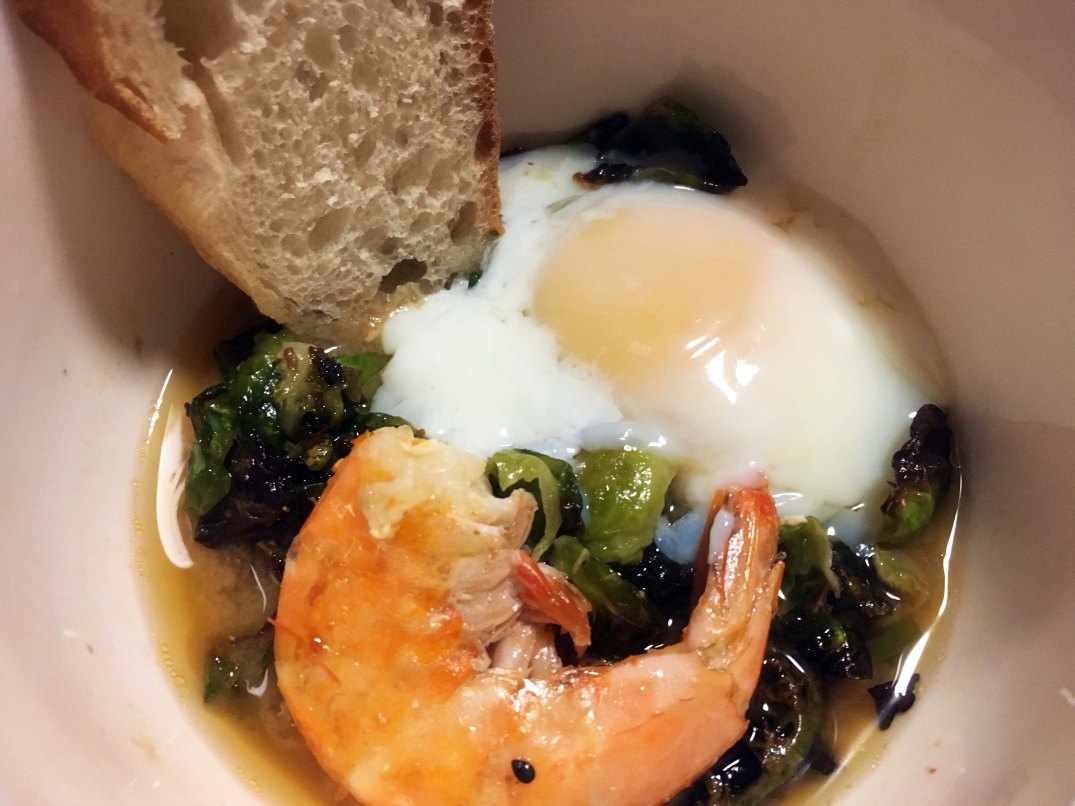
shrimp dashi, brussels sprouts leaves, 62C egg
I was recently interviewed by Nature about my trajectory into science and my current work with Young Chefs Program: From Cooking to Science. They have yet to correct some facts they got wrong, but was excited to share my passion for cooking, science, and outreach

seabass crude w/ beets, apple, licorice

homemade pumpkin apple ravioli. pine nut anchovy emulsion. charred leeks/brussels sprouts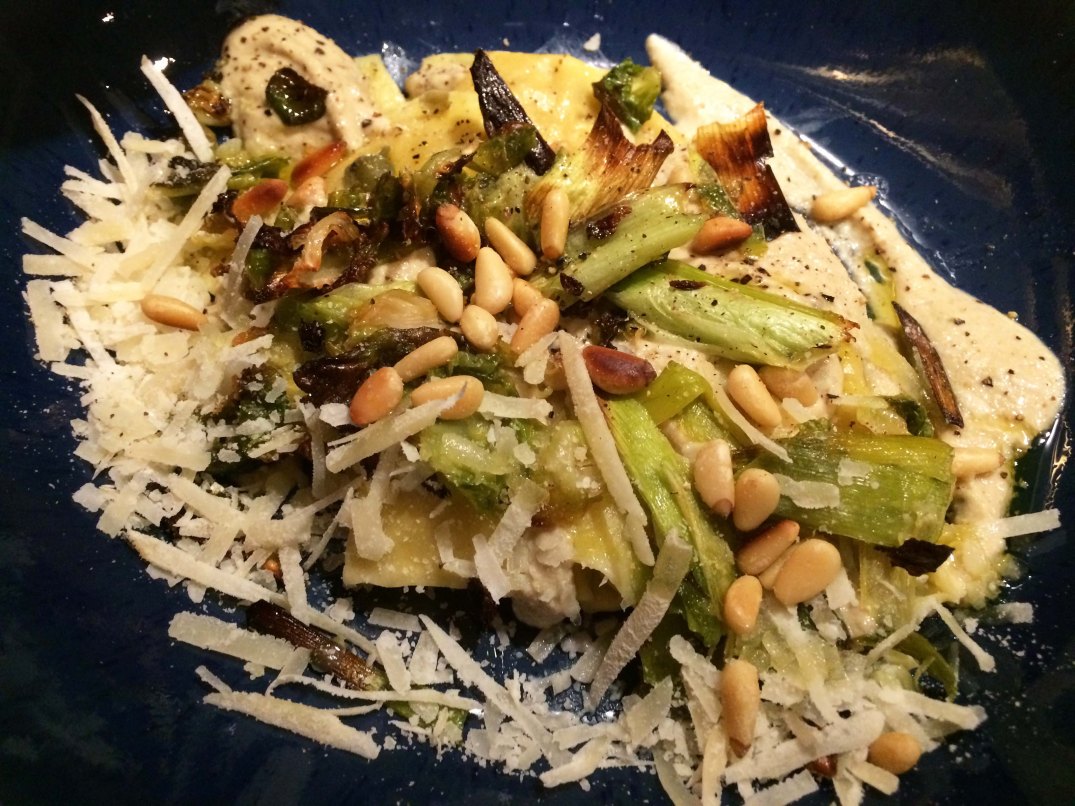


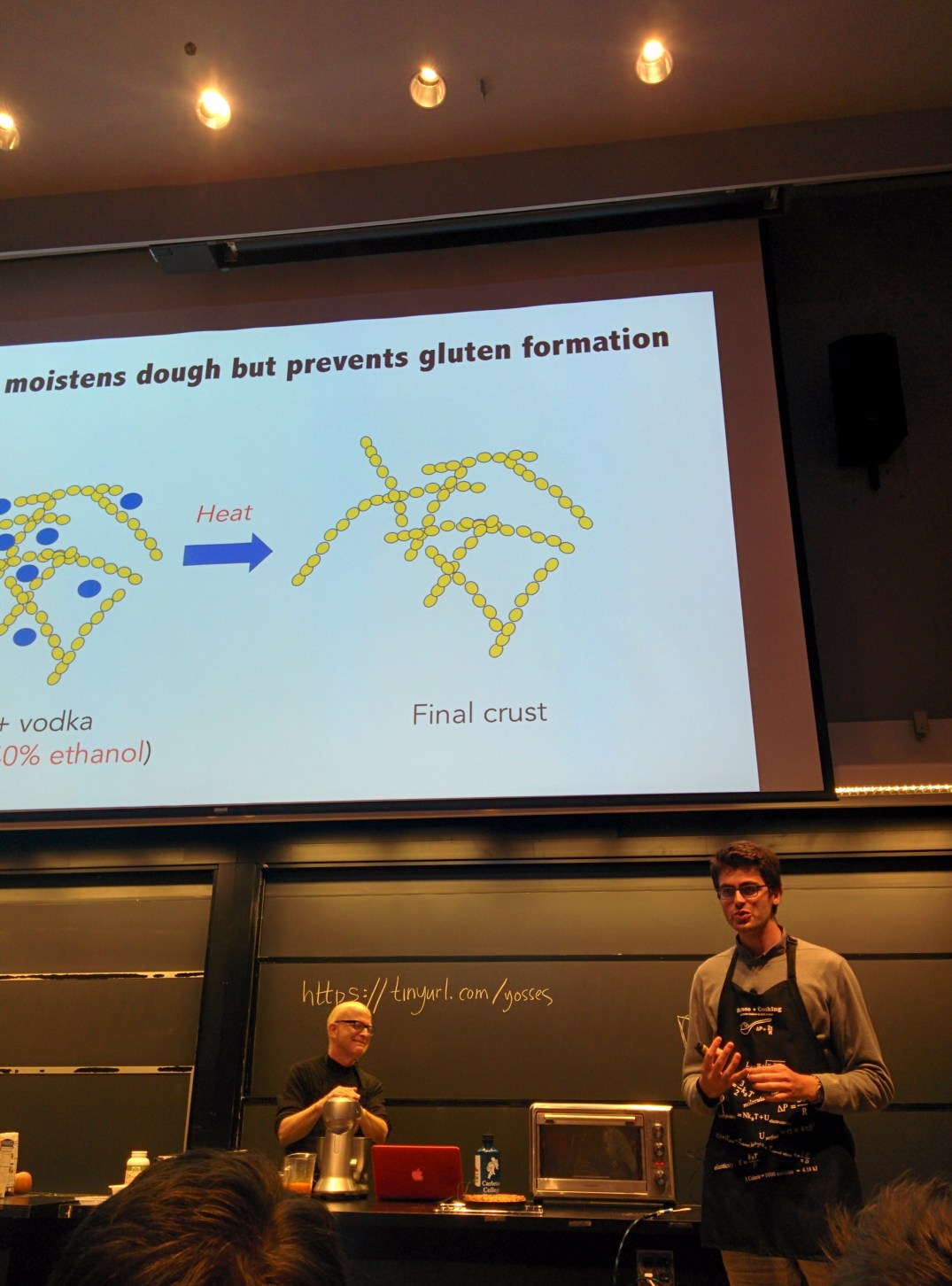
bill yosses and i were invited to give a cooking and science public lecture at harvard for the second year in a row. this time we talked about diffusion, gelation, spherificaiton through the lens of pie. It was and incredible night full of laughter, science, cooking, and inspiration. Thanks to all the 300 people who came!! Always amazing to see a full house for cooking and science!

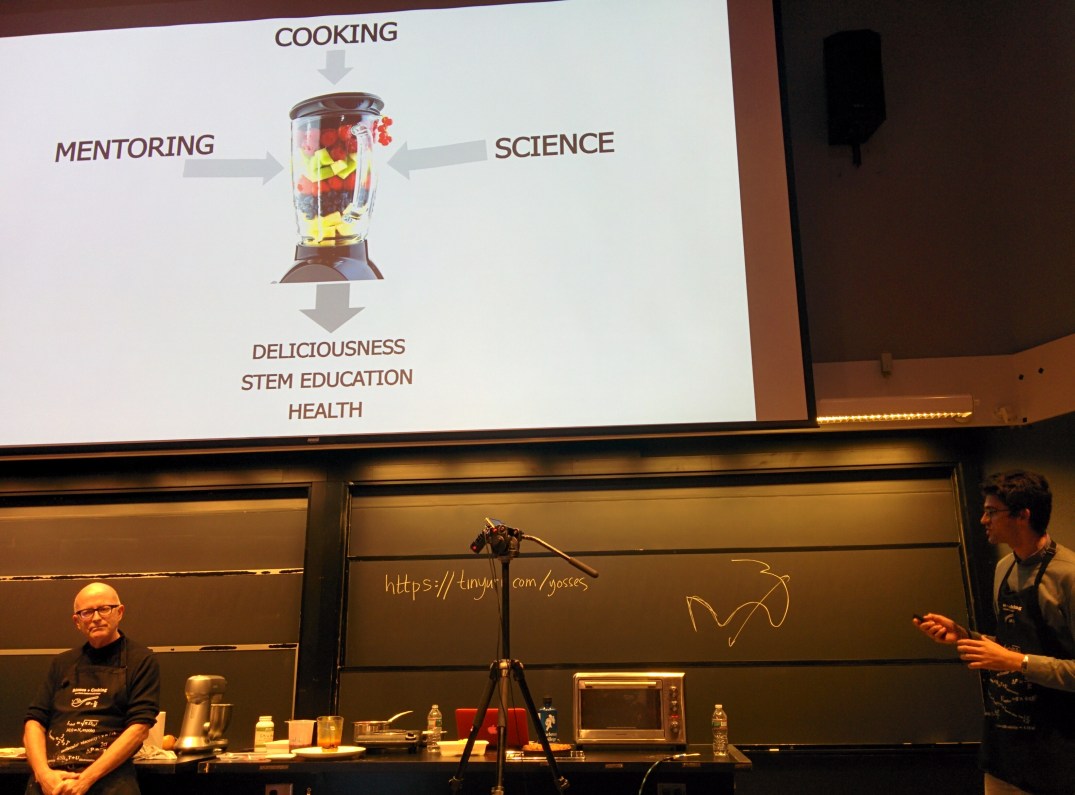
Had an incredible time last weekend hosting the second annual HILS community cooking challenge together with Alec Walker and Alexa Jackson in collaboration with PAGU. This annual event brings together PhD students in the life sciences from all across Harvard University and challenges them to use their scientific skills in the kitchen. Their creations are evaluated by Harvard faculty judges with respect to creativity, flavor, and also use of the secret ingredient. This year the secret ingredient was peppers and the scientific theme was neuroscience. Distinguished neuroscientist Catherine Dulac was our keynote speaker this year – and we had such a blast working with her, the students, PAGU, and the 9-pound bluefish we brought from a local market. Photo cred to prof. Ralph Mazitschek.


New outreach program enables teachers to bring food and cooking experiments into their classrooms
—
Harvard University’s long-standing efforts to equip a new generation of teachers with cutting-edge teaching methods takes an exciting turn with the creation of a new venture, SteamED.
SteamED is a collaboration between the Science and Cooking program, developed by the John A. Paulson School of Engineering and Applied Sciences (SEAS), Young Chefs, and the Harvard Materials Research Science and Engineering Center (MRSEC).
It adapts exercises from the popular Science and Cooking course and Young Chefs to fit Massachusetts state science standards, and is a rare opportunity for highly motivated teachers to bring these exercises into their classrooms. Teachers, community program instructors, and after school program leaders are invited to register (see link below).
Participants will earn 18 PDP points in STEM for participation in the workshops and will receive exclusive access to curriculum and resources, including 27 lesson plans for use in a variety of classroom settings and covering a range of concepts, from experimental design to physical science. Teachers also receive equipment necessary to implement the four lesson plans covered in the two Saturday course sessions.
Dates and times:
Saturday, Nov. 11, 9:30 a.m. – 3:30 p.m.
Saturday, Nov. 18, 9:30 a.m. – 3:30 p.m.
Lessons:
“Chili Infusions: Exploring solubility is so hot right now”
“Pickles: Not your basic vegetable”
“Tortillas: The corny processes of polymer crosslinking and starch gelatinization”
“I Lava Science: Exploring heat diffusion through molten chocolate cake”
Requirements:
Workshops are free of charge. Lunch is provided each day.
Register here: https://tinyurl.com/Harvard-SteamED-Workshops.
For questions, please contact: SteamEDharvard@gmail.com


A true honor to join as an expert on the Naked Scientists, a radio programme based at Cambridge University who broadcast over the BBC, ABC Australia and release an award-winning podcast.
This week I was asked a fundamental question about cooking and science:
how much alcohol remains after cooking?
find my answer here:
https://www.thenakedscientists.com/podcasts/question-week/how-much-alcohol-does-cooking-remove

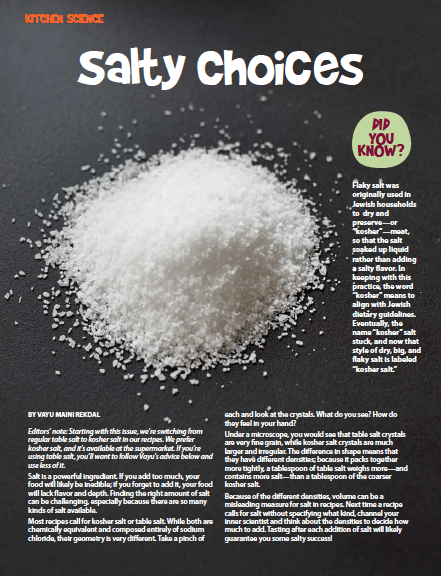
New article in ChopChop Magazine, the cooking magazine for families that reaches three million people annually. This kitchen science column discusses the difference between different salts and how that translates to taste and texture in the kitchen.
 Vayu Hill-Maini